
Biography
Consolidated biographical data compiled from Arolsen Archives (ITS), Yad Vashem records, and personal family documents.
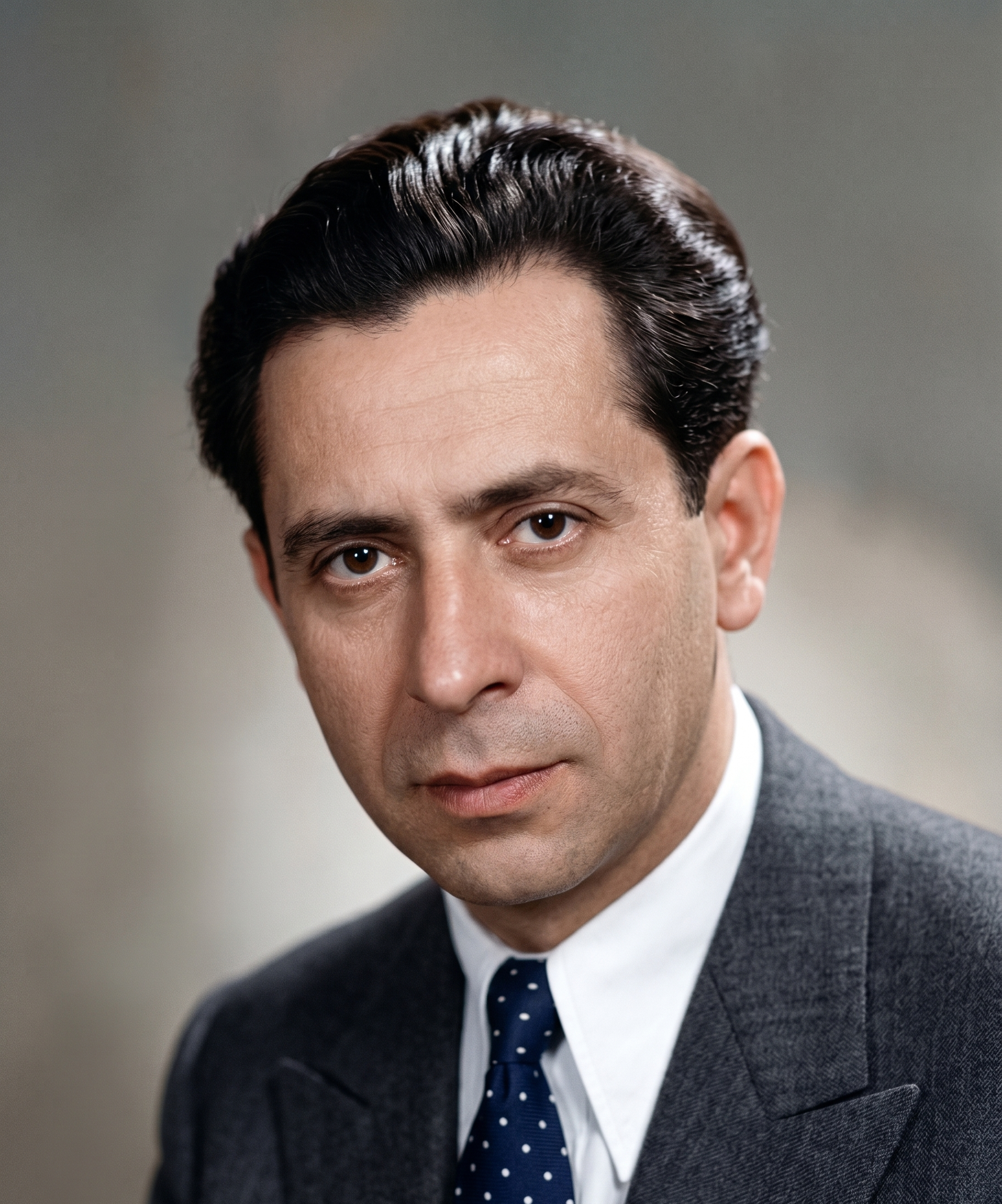
Herman Zvi Freiman was born in Boryslaw in 1910.
His wife and children did not survive the Holocaust. He did.
Parents
| Relation | Name |
|---|---|
| Father | Feibel FREIMAN (variants: Faivel, Faifel, Fajwel) |
| Mother | Shifra ROSEN (variants: Schifra, Szyfra) — née Rosen |
Marriage & Family
First Marriage (Pre-War)
Herman's first wife was Brunya. They had one son, Israel (known as Srolic). Both Brunya and Israel were murdered during the Holocaust. The 1959 ITS form lists his marital status "at the time of incarceration" as ledig (single), which may have been an administrative simplification or error — family oral history confirms the pre-war family.
Second Marriage
| Field | Information |
|---|---|
| Wife | Ester FREIMAN (née unknown) |
| Wife's Birth Date | April 15, 1920 |
| Marriage Date | Shabbat, Hebrew year 5705 (1945) |
| Marriage Place | Częstochowa, Poland — likely, per Ketubah (see Documents) |
| Children | Five children: Shraga (Feivel), Eliyahu, Moshe, Bracha, Yosef |
Survival: Ghetto, Forced Labor, and Partisan Resistance
From July 1941, Herman was confined first to the Boryslaw Ghetto, then to the ZAL (Zwangsarbeitslager — Forced Labor Camp) Boryslaw, where most inmates worked for the Karpathen Öl A.G. oil concern. As a tailor (Schneider), Herman served a different but equally critical function: making and repairing clothing and uniforms for German personnel. The Yad Vashem Pinkas HaKehillot confirms that this was the precise category — "craftsmen and persons in professions essential to the German economy" — that was specifically spared from the deportation trains to the Belzec extermination camp that killed the majority of Boryslaw's 13,000–14,000 Jews.
In March 1944, Herman escaped from the ZAL — approximately one month before German forces liquidated the camp. On 13 April 1944, the ~600 Jews still remaining were deported to the Płaszów concentration camp; subsequent transports went to Mauthausen and Auschwitz. Herman's escape in March 1944 is what separated his fate from theirs.
After escaping, Herman joined partisan resistance fighters operating in the forests surrounding Boryslaw. The Pinkas records that such groups were armed and used their weapons against German and Ukrainian pursuers. He fought with the partisans until Soviet forces liberated Boryslaw on 7 August 1944.
His first wife Brunya and their son Israel ('Srolic') did not survive — murdered during the years of Aktionen and deportations. From March 1944 through November 1948 Herman was a stateless displaced person. After liberation he made his way westward into Poland. The family's Ketubah (Jewish marriage certificate), which survives in the family archive, records that Herman — under his full Hebrew name צבי הירש (Tzvi Hirsch) — married Ester in Częstochowa in 1945, most likely while passing through that city as displaced persons. They then registered an address at Bielawa, Wolności 131 (Lower Silesia) — a temporary residence typical of Jewish DPs in postwar Poland awaiting emigration — recorded in the January 1947 Polish Jewish Registry, though Herman had already left for the Ulm DP Camp in Germany by September 1946. Together they had five children: Shraga (Feivel), Eliyahu, Moshe, Bracha, and Yosef.
Document Sources
Arolsen Archives (ITS)
- TD (Tracing Document) File 790 495 — 26-page bundle; primary wartime record
- DP-2 Cards: September 4, 1946 / November 20, 1946 / July 1, 1947
- DP-3 Card: Assembly Center Registration
- Certificate of Residence No. 413381 (February 26, 1960)
- Power of Attorney (Vollmacht) dated October 20, 1959
- Polish Jewish Registry (Warsaw, January 1947) — entry: Frajman Herman, 1910, Fajwel, Szyfra, Borysław, Bielawa Wolności 131
- Palestine Emigration Lists (September 30, 1948) — Ulm DP Camp, Emigration List Nr. 19
- Arolsen Archives cover letter — transmittal correspondence, April 2023
Yad Vashem / ITS
- Pinkas HaKehillot — Boryslaw entry (Yad Vashem Encyclopedia of Jewish Communities in Poland — full OCR English translation)
- ITS Database Search Results: TD file bundle (16 pp.) · Doc. 1 · Doc. 3 · Doc. 4 · Doc. 5
Personal Family Archives
- Portrait photograph of Herman Freiman — circa age 40, likely Kfar Ata, 1950s
- Earlier formal portrait (27A)
- Earlier formal portrait (27B)
- Family photograph — Herman, Ester, and three sons in Israel